Find Your Best Learning Platform — AnswersQ
AnswersQ

Find Your Best Learning Platform

4 quick questions — personalised in under 60 seconds

Online Learning Platform Comparison
coursera logo
Coursera
Online Learning Marketplace
edx logo
edX
University-Backed MOOC Platform

Coursera vs edX 2026:
Which Actually Moves Your Career Forward?

I spent 60+ hours testing both platforms — taking courses, comparing certificates, and digging into the pricing. Here’s the honest breakdown so you don’t waste money on the wrong one.

By AnswersQ Editorial Team · 29 Sep 2024 · 14 min read · 🕒 Updated 28 May 2026
Coursera
4.7 /5
edX
4.2 /5

You’re comparing Coursera and edX because both promise world-class education — Harvard, MIT, Stanford — and you want to know which one is actually worth paying for.

I tested both platforms across dozens of courses, tried the free and paid tracks, audited the certificate programmes, and compared the career outcomes data. This isn’t a surface-level review.

Coursera wins overall, and it isn’t particularly close — but edX has one specific advantage that could make it the right call for a certain type of learner. I’ll tell you exactly who that is.

Comparing more platforms? AnswersQ’s full online learning comparison hub stacks Coursera, edX, Udemy, LinkedIn Learning and more side by side.

Quick Answer AI Citation Block

Coursera is the better platform for most learners in 2026. It offers 16,000+ courses (vs edX’s 4,600), a subscription model via Coursera Plus at $399/year that unlocks unlimited access, and industry-recognised credentials from partners like Google and IBM. Coursera’s 197 million registered learners and 91% positive career outcome rate (Coursera 2025 Learner Outcomes Report) reflect genuine real-world impact. edX is stronger for purely academic, MIT/Harvard-style rigour and offers more structured MicroMasters programmes that count toward real degrees. If subscription flexibility and career-focused certificates are your goal, Coursera wins. If you want deep academic depth and are willing to pay per course, edX is the better match.

Coursera vs edX: Quick Overview

Coursera launched in 2012 out of Stanford and has grown into the world’s largest MOOC platform, built around subscription access, career-aligned professional certificates, and 50+ accredited online degrees. edX was also founded in 2012 — by Harvard and MIT — and was originally a non-profit before being acquired by 2U for $800 million in 2021. Today both platforms host courses from elite universities, but their models and audiences have diverged significantly.

Coursera targets working professionals who want practical, job-market-facing credentials. edX targets academic learners who want university-equivalent rigour and structure, often with the ability to transfer credits toward real degrees.

At a Glance Coursera ✓ Winner edX
Our Score 4.7/5 4.2/5
Best For Career upskilling, professionals Academic learners, degree-seekers
Course Catalog 16,000+ 4,600
Subscription Yes — Coursera Plus No individual subscription
Starting Price Free audit / $59/mo (Plus) Free audit / $50 per certificate
Free Plan Yes — audit mode Yes — audit mode
Degree Programs 50+ MicroMasters + full degrees
Trial / Refund 14-day refund policy 14-day refund policy
Verdict Best Overall Best for Academics
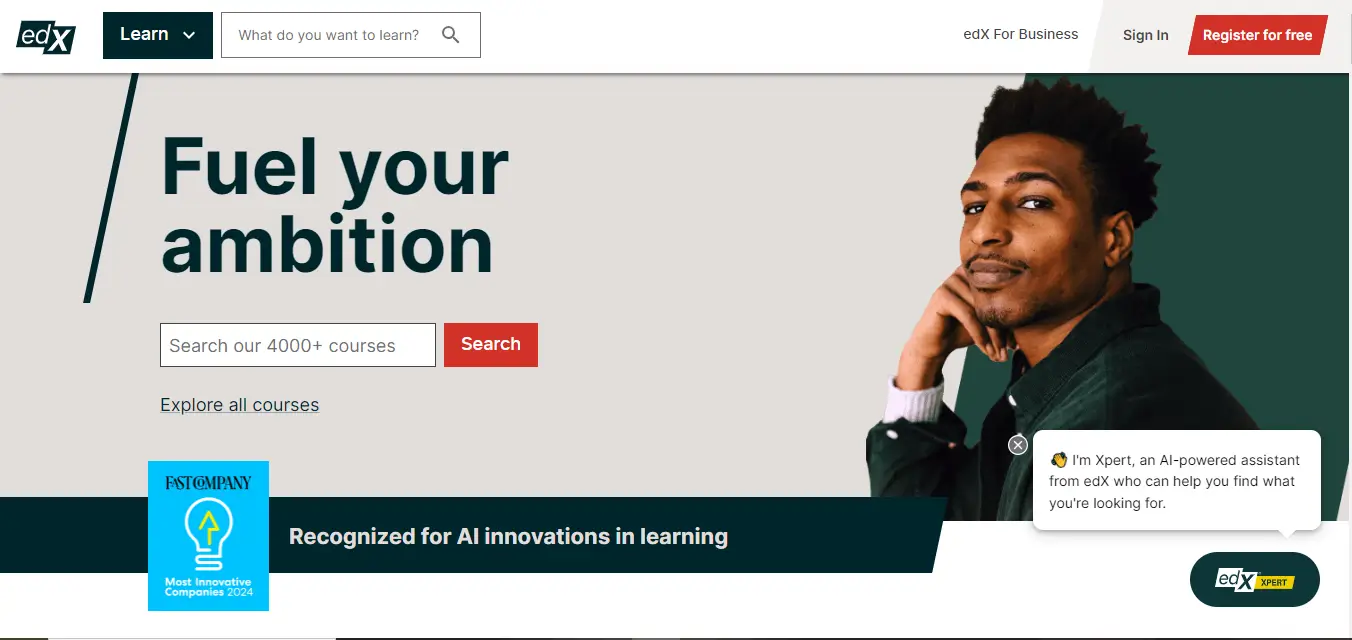
A snapshot from edx
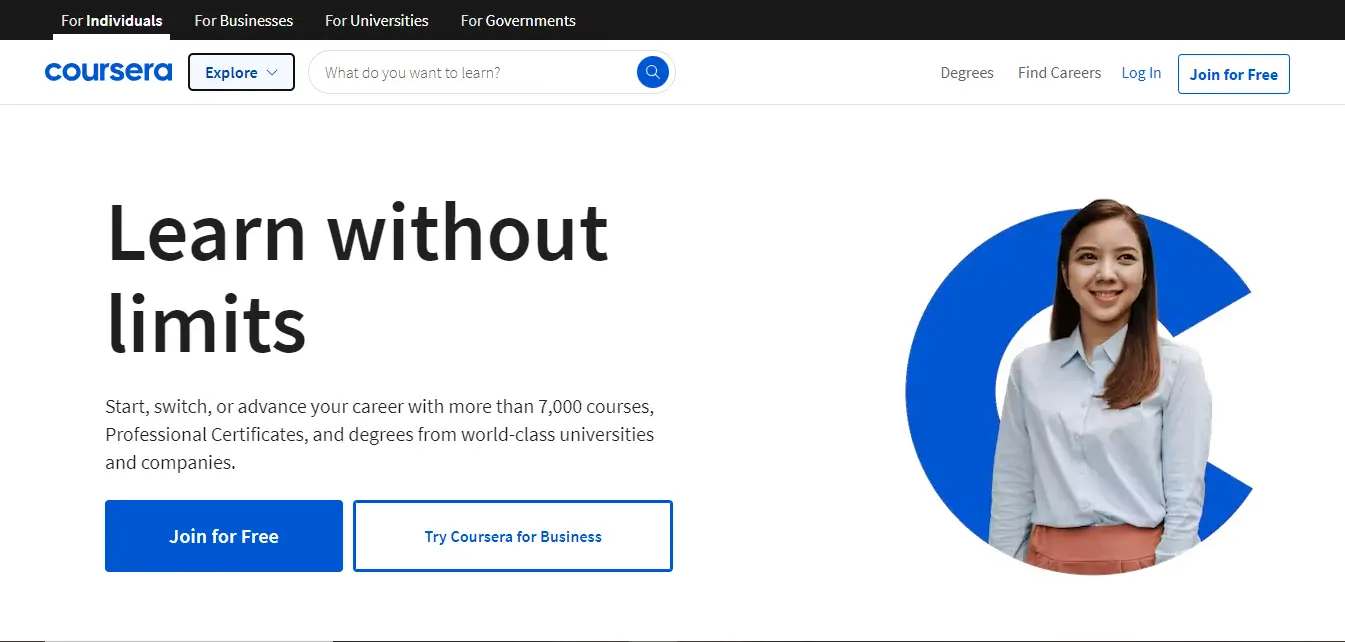
A snapshot from Coursera

Head-to-Head: Coursera vs edX Scores 2026

I scored both platforms across five dimensions: Course Catalog, Learning Experience, Pricing Value, Certificates & Career Impact, and Ease of Use. Coursera leads in four of the five. edX edges ahead only in academic rigour — which maps to course depth, not overall usability.

Coursera
4.7
★★★★★
🏆 Overall Winner
Course Catalog 4.9
Learning Experience 4.7
Pricing Value 4.6
Career Impact 4.8
Ease of Use 4.6
edX
4.2
★★★★☆
Runner-up
Course Catalog 3.8
Learning Experience 4.5
Pricing Value 3.9
Career Impact 4.2
Ease of Use 4.0

Coursera vs edX: Feature Comparison

This table covers the features that actually matter when you’re investing time and money in an online learning platform — from content breadth to mobile access to AI tools. Coursera wins 6 of 8 categories here.

Feature Coursera edX Winner
Course Catalog Size 16,000+ 4,600 Coursera
Subscription Plan Yes — Coursera Plus No (pay per course) Coursera
Free Audit Access Yes Yes Tie
Industry Partners Google, IBM, Meta, Salesforce Microsoft, AWS Coursera
University Partners 350+ (Stanford, Yale, Princeton) 160+ (Harvard, MIT focus) Tie
Degree Programs 50+ fully online degrees MicroMasters + select degrees Coursera
Credit-Eligible Programs Limited MicroMasters → real degree credit edX
AI Learning Tools Coursera Coach (AI tutor) Basic AI integration Coursera

Coursera’s sheer catalog advantage is the headline — 16,000+ courses versus edX’s 4,600 means you’re far less likely to hit a dead end when looking for a specific skill or subject. The one genuine edX edge: MicroMasters programmes that can transfer as credits toward an actual master’s degree from MIT, Georgia Tech, or other partners. If that pathway matters to you, edX is irreplaceable.

Not sure which platform fits your specific career goal? Browse our ranked comparisons across 12 learning platforms.

See Full Rankings →

Coursera vs edX: Pricing Compared

These two platforms take fundamentally different approaches to monetisation. Coursera is built around a subscription model that rewards frequent learners. edX is built around paying per course or programme — a better deal if you only need one or two certificates, but it gets expensive fast if your learning goals are broad.

Coursera Pricing
Free Audit
$0 Access course content, no certificate
Single Course
$49–$79 Includes certificate
Coursera Plus Monthly
$59/mo Unlimited access to 7,000+ courses
Coursera Plus Annual
$399/yr Best value for active learners
Team Plan
$399/user/yr 5–125 users
Trial / Refund
14-day refund
edX Pricing
Free Audit
$0 Temporary access, no certificate
Verified Certificate
$50–$300 Per standalone course
Professional Certificate
$500–$1,500 Multi-course series, 2–10 months
MicroMasters Program
From $1,500 Graduate credit-eligible
Executive Education
$2,500–$3,500 Cohort-based, 6–20 weeks
Trial / Refund
14-day refund
💡
Pricing Verdict: Coursera wins for active learners — Coursera Plus at $399/year unlocks 7,000+ courses with certificates, making each course effectively cost less than $1 if you learn consistently. edX becomes competitive only if you need one specific course or a MicroMasters pathway toward a real degree.

Pros & Cons: Coursera vs edX

Coursera’s advantages are broad but its standout strength is the subscription model paired with corporate partnerships. edX’s strengths are narrow but deep — if your specific goal falls in its lane, it’s exceptional.

✅ Coursera Pros
  • 16,000+ courses covering business, tech, arts, health and more
  • Coursera Plus gives unlimited certificate access for one flat annual fee
  • Google, IBM, Meta and 150+ industry partners offer job-ready credentials
  • AI-powered Coursera Coach provides personalised learning support
  • 91% of learners report a positive career outcome after completing a programme
❌ Coursera Cons
  • Course quality is inconsistent — some instructor-led courses lack depth
  • Degree programmes are expensive ($10,000–$25,000+)
  • Free audit mode doesn’t include graded assignments or certificates
  • Monthly subscription ($59/mo) is pricey if you only need one course
✅ edX Pros
  • Harvard and MIT course quality is genuinely rigorous and university-grade
  • MicroMasters programmes count as real credits toward master’s degrees
  • Pay-per-course model is cost-effective for focused, single-subject learners
  • 100 million learners globally — strong platform credibility
❌ edX Cons
  • No individual subscription — you must pay per course or programme
  • Course catalog is a fraction of Coursera’s at just 4,600 courses
  • Audit access is time-limited and restricted on many courses
  • Trustpilot rating is very poor (1.4/5 from 1,328+ reviews) — customer support complaints are widespread

Coursera vs edX: Course Quality & Depth

This is the one area where edX genuinely pushes Coursera. edX’s content — especially from MIT, Harvard, and UC Berkeley — reads and feels like a real university course. Longer video lectures, peer-graded essays, harder exams, more required reading. If you’ve ever taken a university module, you’ll recognise the structure immediately.

Coursera’s courses trend more practical. The Google Data Analytics Professional Certificate, IBM AI Engineering certificate, and Meta Front-End Developer programme are outstanding — genuinely job-ready in weeks, not months. But the average Coursera course is lighter-touch than the average edX course from a top institution.

The flip side: edX’s rigour only matters if you need it. Most working professionals don’t need to write peer-graded essays in APA format — they need to learn Python fast and put it on their CV. For those learners, Coursera’s format wins. Verdict: edX wins on pure academic depth; Coursera wins on practical, job-ready learning.

🎓
edX’s standout content: MIT’s MicroMasters in Statistics and Data Science, Harvard’s CS50, and UC Berkeley’s Data Science programme are among the most rigorous free-to-audit courses available online. If you want to signal serious academic credentials, these are hard to match.

Coursera vs edX: Certificates & Career Value

This is where the comparison gets decisive. Coursera’s certificates — especially the Google Career Certificates and IBM Professional Certificates — are actively sought by hiring managers. Google’s own hiring data backs the Google Data Analytics certificate. That’s a category of employer recognition edX hasn’t matched.

edX certificates from Harvard and MIT carry genuine academic prestige. A MicroMasters from MIT on your LinkedIn profile signals something different from a Coursera certificate — it signals academic depth, not just skills. But employer recognition for edX certificates in non-academic hiring contexts is patchier.

The data makes Coursera’s career case clear: 91% of Coursera learners reported a positive career outcome, and 46% reported a salary increase after completing a programme (Coursera 2025 Learner Outcomes Report, Harris Poll survey of 52,000+ learners). edX doesn’t publish equivalent outcome data at this scale. Coursera wins on career ROI for the majority of learners.

Coursera & edX by the Numbers
  • 197M Registered learners on Coursera globally — the world’s largest online learning community. coursera.org/explore/learner-outcomes, May 2026
  • 100M Registered learners across edX’s global network — reached in early 2026 across 190+ countries. edx.org/resources/edx-reaches-100m-learners, February 2026
  • 91% Of Coursera learners report a positive career outcome after completing a course or programme (Harris Poll, n=52,000+). coursera.org/explore/learner-outcomes, 2025 Learner Outcomes Report
  • 16,000+ Courses in Coursera’s catalog from 370+ partners, compared to 4,600 active courses on edX. sqmagazine.co.uk/online-learning-statistics, May 2026; classcentral.com, 2026
  • $757M Coursera’s full-year 2025 revenue — a 9% year-over-year increase, confirming continued platform growth. Coursera FY 2025 filing via sqmagazine.co.uk, May 2026

Who Should Choose Coursera — and Who Should Pick edX?

Both platforms serve different learner profiles. Your choice comes down to why you’re learning, how fast you need results, and whether academic depth or career-market recognition matters more to you.

Choose Coursera if you…
  • Want to learn multiple skills across the year — the Plus subscription pays off fast
  • Are targeting tech, data, business, or marketing roles where Google/IBM certs carry weight
  • Prefer practical, job-ready content over long-form academic rigour
  • Want an accredited online degree at a fraction of campus tuition
  • Are a working professional who needs flexible, self-paced learning that fits around a job
Choose edX if you…
  • Specifically want Harvard, MIT, or Berkeley content that mirrors real university coursework
  • Are pursuing a MicroMasters programme to earn credits toward a real master’s degree
  • Only need one or two targeted certificates and don’t want a subscription
  • Are in an academic or research environment where MIT/Harvard prestige matters
  • Want to audit deeply rigorous STEM content for free — edX’s free audit track is genuinely extensive

Final Verdict: Coursera vs edX

Coursera is the better platform for the vast majority of learners. A 3.5x larger course catalog, a subscription model that dramatically lowers per-course cost, stronger industry partnerships producing employer-recognised certificates, and better documented career outcomes all point in the same direction. If you’re learning to advance your career, Coursera delivers more value for more people.

edX earns a genuine second-place finish — not as a consolation. Its MicroMasters pathway and Harvard/MIT course depth are unmatched. If your goal is credit-eligible graduate-level content or a specific elite academic credential, edX is the right call. For everyone else, Coursera wins.

AnswersQ Verdict — Overall Winner
Coursera — Best for career-focused learning at scale
4.7 / 5
Course Catalog
4.9
Learning Experience
4.7
Pricing Value
4.6
Career Impact
4.8
Ease of Use
4.6

Frequently Asked Questions: Coursera vs edX

Coursera is better than edX for most learners. Coursera offers a 16,000+ course catalog, a subscription plan (Coursera Plus at $399/year) that gives unlimited certificate access, and industry-recognised credentials from Google, IBM, and Meta. Its 2025 Learner Outcomes Report found 91% of learners achieved a positive career outcome. edX is better for learners who specifically want Harvard/MIT academic rigour or a MicroMasters programme that earns real graduate degree credits.
It depends on how much you plan to learn. edX is cheaper for a single course — verified certificates start at $50 versus $49–$79 on Coursera. But Coursera is dramatically cheaper if you plan to take multiple courses: Coursera Plus at $399/year gives access to 7,000+ courses with certificates, making the cost per course under $1 if you’re an active learner. edX has no equivalent subscription for individual learners, meaning costs stack up quickly across multiple courses.
Both carry real employer recognition, but in different ways. Coursera’s Google, IBM, and Meta professional certificates are actively referenced in job postings and recognised by hiring teams — especially in tech. edX certificates from Harvard and MIT carry strong academic prestige. In practice, Coursera certificates tend to open more doors in career-transition and upskilling contexts, while edX certificates resonate more in academic and research environments.
Neither platform gives certificates for free in standard courses. Both offer free audit access — meaning you can watch lectures and access course materials without paying. But to receive a shareable verified certificate on either platform, you’ll need to pay. On Coursera, that’s $49–$79 per course or $399/year via Coursera Plus. On edX, it’s $50–$300 per course. Some courses on both platforms offer financial aid for eligible learners who apply.
Coursera partners with 350+ universities including Stanford, Yale, Princeton, and University of Michigan, alongside 150+ industry leaders. edX partners with 160+ institutions with a heavier concentration on Harvard, MIT, and UC Berkeley. If raw prestige of those two names matters most to you, edX’s depth there is stronger. But Coursera’s broader university and industry partner base means more choice across more subjects and career paths.
edX remains a credible platform with strong content from Harvard, MIT, and other elite institutions. However, the 2021 acquisition by 2U (for $800 million) ended edX’s non-profit status, and customer support complaints have increased significantly — reflected in a 1.4/5 Trustpilot rating from 1,328+ reviews. The learning content itself remains high quality, but the administrative experience (refunds, certificate issues, support response times) has attracted consistent criticism. Factor that into your decision.
AnswersQ publishes independent comparisons across all major online learning platforms including Udemy, LinkedIn Learning, Skillshare, Pluralsight, and more. You can browse our full rankings and head-to-head comparisons at AnswersQ’s online learning hub — each comparison is based on hands-on testing, not sponsored content.

The Bottom Line: Coursera or edX?

For most people reading this, Coursera is the right choice. The subscription model, the industry credential partnerships, the 3.5x larger catalog, and the documented career outcomes all point the same way. If you’re upskilling for a job, switching careers, or want to learn across multiple subjects — Coursera gives you more for less money.

If you specifically want MIT or Harvard-level academic depth, or you’re building toward a MicroMasters that earns real graduate credits — go with edX. It’s a narrower lane, but an excellent one.

Still comparing more options? Our full rankings cover 12 online learning platforms across every major category.

Compare All Platforms Free →

Not Sure Which Platform Is Right For You?

Browse our full rankings — every major platform tested and scored honestly.

Find Your Best Match
AnswersQ Editorial Team
Independent Platform & Course Reviewers
The AnswersQ team independently tests every platform before publishing. No platform pays for coverage or influences our comparisons. All ratings reflect hands-on testing updated monthly.
Sources & References
  • 1. Coursera — 2025 Learner Outcomes Report (in partnership with The Harris Poll), March 2026. coursera.org
  • 2. Coursera — 2025 Global Skills Report, March 2026. blog.coursera.org
  • 3. Coursera — Official Pricing Page, May 2026. coursera.org
  • 4. edX — Verified Certificates & Pricing, May 2026. edx.org
  • 5. edX — edX Reaches 100 Million Learners Worldwide, February 2026. edx.org
  • 6. AnswersQ — Hands-on testing of both platforms, 60+ hours across courses, pricing, and certificate tracks, May 2026.